
Duke Farms | Decarbonization journey

Natural Systems Energy Plan

The Natural Systems Energy Plan is Duke Farms' decarbonization roadmap, and it provides the framework for planning and implementing projects that reduce our carbon footprint and other emissions.

NSEP overview

Duke Farms' decarbonization journey.

NSEP connects conservation, efficiency, clean electricity, electrification, storage, and energy measurement so Duke Farms can reduce greenhouse gas and other emissions while supporting resilient operations at the lowest possible cost. Reducing emissions also supports public health by lowering pollution associated with energy, fuels, vehicles, and equipment.

What NSEP means

Why the Natural Systems Energy Plan matters

  • NSEP stands for Natural Systems Energy Plan. It focuses on energy conservation, efficient buildings, clean electricity generation, electrification, battery storage, and progress measurement.
  • A core concept is moving from fuels to naturally occurring flows of energy that are all around us. Fossil fuels are concentrated sunlight, captured millions of years ago by organisms that after time and pressure became the energy sources we depend upon today. Instead, the plan specifically leverages the natural energy flows that already exist on the property, and aligns energy use with those resources without sacrificing the operational profile or resorting to energy austerity.
  • It matters because energy choices shape emissions, resilience, utility costs, building performance, fleet and equipment transition, and public-facing infrastructure.
  • The plan also forces trade-offs: each phase has to meet demanding sustainability goals while keeping costs as low as possible.
  • NSEP is not Duke Farms' only sustainability plan. Future companion plans for waste, water management, land use and agriculture, and operations are currently being developed and can sit alongside it within a broader sustainability framework.

NSEP goals

A rapid decarbonization plan moving from energy fuels to natural flows.

Goal setting is the crucial first step of the NSEP. The goals were developed by baselining current energy use, quantifying and prioritizing the opportunities and key strategies, and reviewing market-leading goals established by others. The goals organize Duke Farms' energy work from clean electricity toward lower emissions, carbon neutral operations, and carbon negative operations at the lowest possible cost.

  1. Goal 1

    100% Clean Electricity

    On-site solar produced 1,909,768 kWh against 1,919,752 kWh of campus electricity used in 2025.

    2025 result
    99.5%
  2. Goal 2

    80% Lower Emissions

    Reduce greenhouse gas and other emissions from electricity, heating fuels, vehicle fuels, and refrigerants against the 2023 starting year.

    Target
    80% reduction
  3. Goal 3

    Carbon Neutral Operations

    Pair deep greenhouse gas emissions reductions with clean electricity, electrification, resilience improvements, specialized solutions, and land stewardship to balance remaining operating emissions.

    Target
    Net zero
  4. Goal 4

    Carbon Negative Operations

    Move beyond neutrality by connecting lower emissions with long-term carbon removal, habitat restoration, and nature-positive land management.

    Target
    Beyond net zero

Energy snapshot

What is the current clean-energy platform?

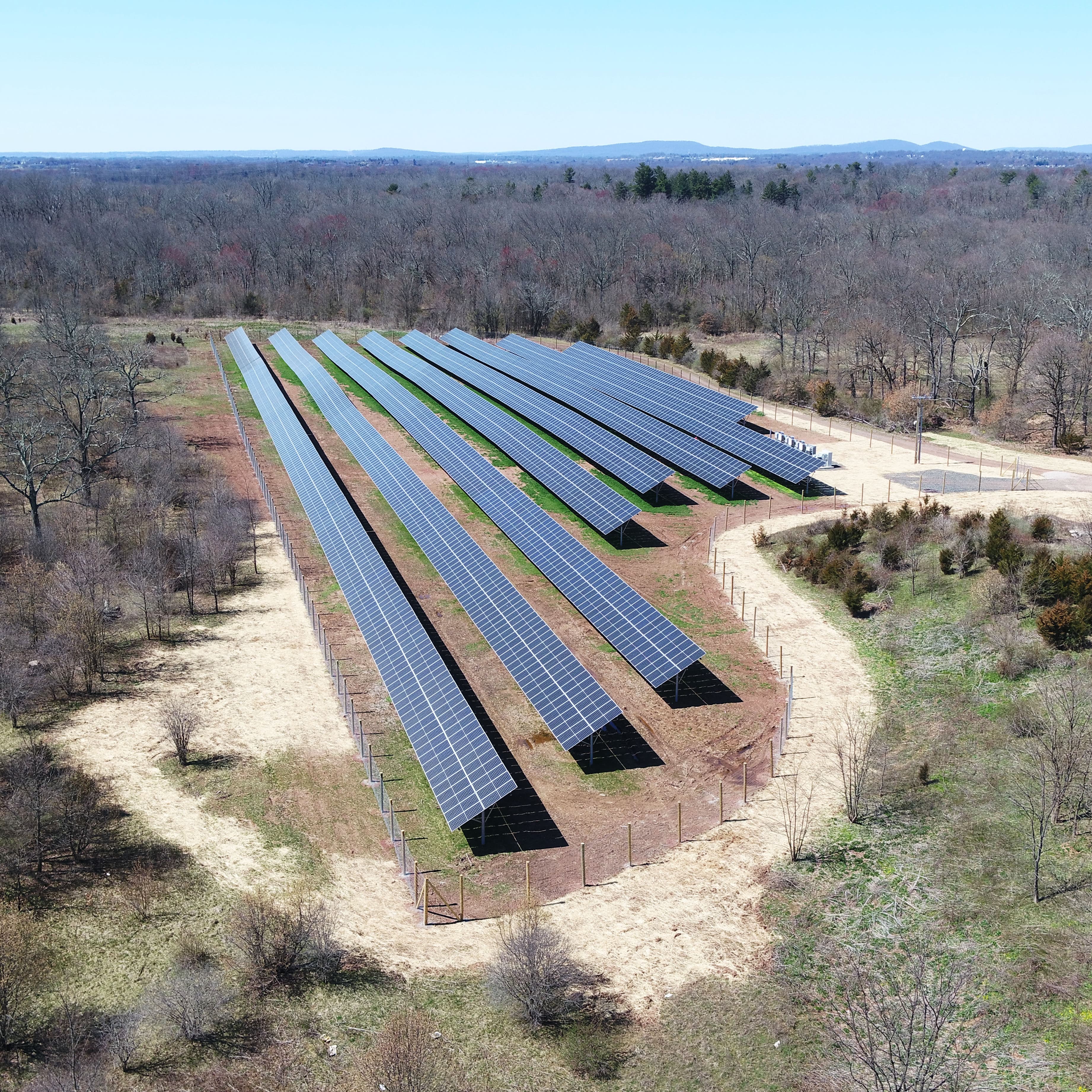
  • Two solar arrays1.799 MW DC

    Combined on-site PV capacity from the 640 kW DC original array and the 1,159 kW DC 2024 array.

  • Battery storage800 kW / 1.6 MWh

    Battery storage helps shift daytime solar generation into later load service and supports resilience planning.

  • Clean electricity99.5%

    2025 result: 1,909,768 kWh of on-site solar produced against 1,919,752 kWh of campus electricity used.

    Note: Goal 1 is defined as 100% clean electricity on a net annual basis. The 2025 measured result was 99.5% because Duke Farms' on-site solar production nearly matched annual campus electricity use. The exact protocol for how clean energy credits are managed relative to reporting against carbon reduction goals is currently under development.

  • Physical and economic impact56.7% / 42.8%

    The combination of the solar array and integrated storage means 56.7% of electricity use is physically served by solar directly or from the battery, while 42.8% of load is offset economically through net metering.

Campus energy system

Campus energy backbone

The campus energy map separates the Farm Barn Circuit and Core Campus from the Western Farm Houses, showing how on-site solar and battery storage currently serve the site.

  • Farm Barn Circuit and Core Campus are shown as powered by on-site renewables.
  • Western Farm Houses are shown as grid-only in the current map.
  • The campus energy system includes 640 kWDC solar, 1,159 kWDC solar, and an 800 kW battery.
  • The campus-wide distribution backbone was a key advantage of the existing property that NSEP could use; one backbone means the solar and storage projects can offset emissions for most buildings on the site more easily.
The map shows how campus energy infrastructure connects across the site.

Clean electricity

How close was Duke Farms to the 2025 clean-electricity goal?

2025 net annual match

Annual load
1,919,752 kWh
Annual solar
1,909,768 kWh

On-site solar production nearly matched campus electricity use in 2025. Goal 1 is defined as 100% clean electricity on a net annual basis.

Physical and economic load service

37.8% direct solar18.9% solar from battery42.8% net-metered offset

Direct solar and battery-shifted solar physically served 56.7% of electricity use. Net metering economically offset another 42.8%; the remaining utility power not offset by solar was 0.5%.

Implementation milestones

Projects that build the decarbonization pathway.

  1. 640 kW DC solar arrayComplete
  2. Geothermal heat pumpsComplete
  3. LEED Platinum Orientation Center, conservation and efficiency measuresComplete
  4. 35% of vehicles and equipment have been electrifiedOngoing
  5. Public EV charger installationComplete
  6. 800 kW battery storage installationComplete
  7. 1,159 kW DC solar array installationComplete
  8. EV fleet charger installationComplete
  9. Greenhouse electric heat conversionPlanned
  10. Guest house electric heat conversionPlanned